
Trending
GeminiCartoon Accessory Add-On (Variant 3)
Anime & Cartoon
Descriptive, camera-aware prompts that translate well to Midjourney. Add parameters like --ar 4:5 or --style raw to match your format.
Add cartoon-style objects and accessories to the uploaded image [STYLE REFINEMENT VARIANT 3]: Rendering variation: Framed in medium-close perspective with balanced studio three-point lighting, subtle atmospheric warmth, crisp edge separation, and natural textural fidelity while preserving the exact aesthetic intent.
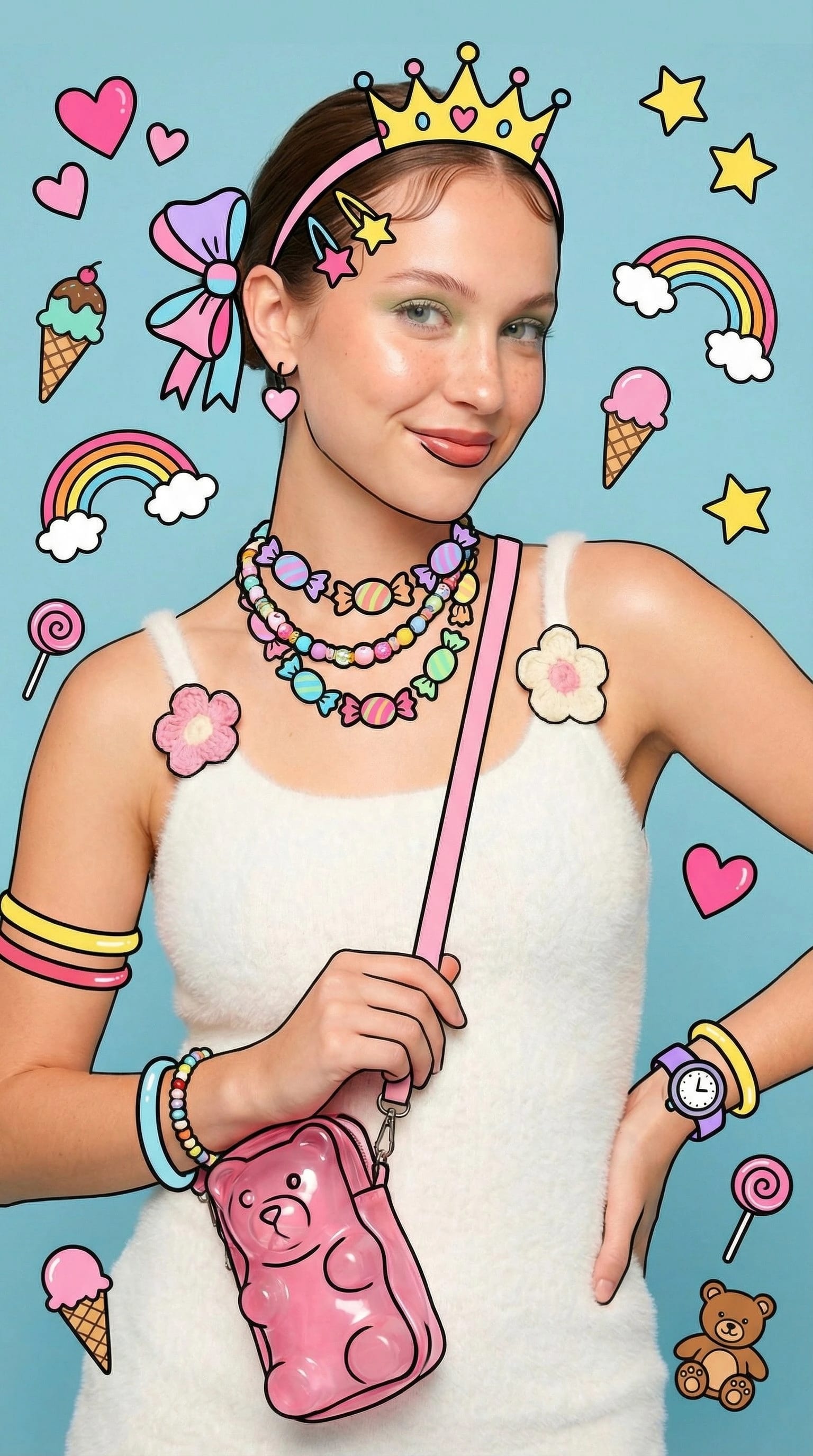
Add cartoon-style objects and accessories to the uploaded image [STYLE REFINEMENT VARIANT 2]: Rendering variation: Captured with 85mm prime lens at f/1.4 for cinematic optical separation, soft directional lighting with gentle fill roll-off, maintaining complete consistency with the core subject and stylistic integrity.
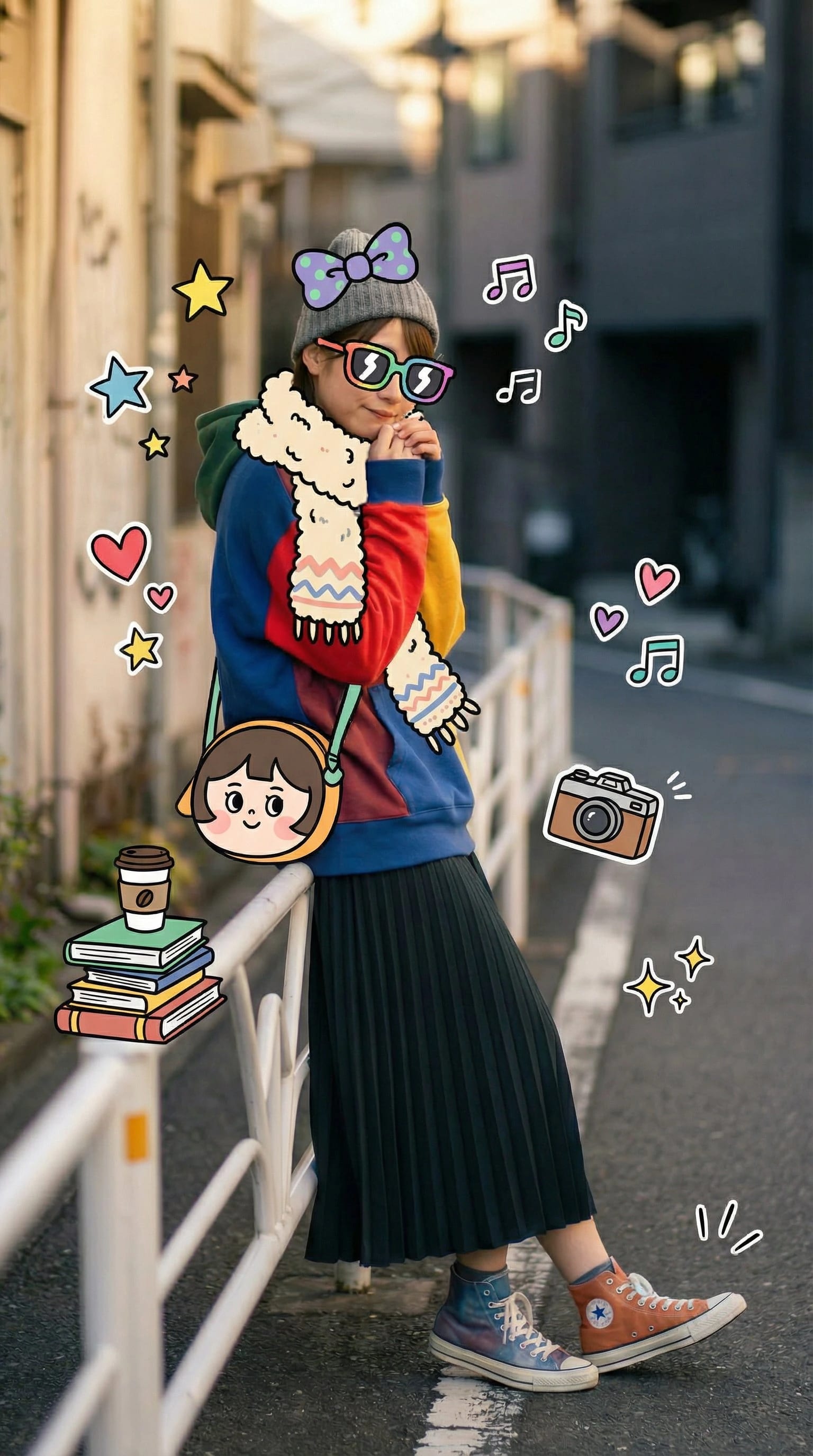
Add cartoon-style objects and accessories to the uploaded image

[SUBJECT_DETAIL] = a Mountain Dew can with bold logo fully visible, partially opened, aggressive aluminum deformation [ICE_FORM] = massive crystal-clear ice block [STATE_OF_SUBJECT] = frozen mid-explosion with extreme energy [BACKGROUND] = pure matte black studio void INSTRUCTIONS Make a hyper-realistic cinematic image intended for premium advertising visualization. Frame the scene so the entire [ICE_FORM] is fully visible from top to bottom with clear separation from the background. Place a single [ICE_FORM] centered in the frame with balanced negative space on all sides. Render the ice as a dense translucent frozen mass with layered internal depth, sharp pressure fractures, and suspended ice shards. Encapsulate [SUBJECT_DETAIL] completely inside the ice, fully enclosed and not touching the outer surface. Freeze the can in [STATE_OF_SUBJECT], with frozen liquid splash arcs and carbonation bursts suspended in place. Preserve explosive motion through bent aluminum edges and outward force geometry. Apply strong optical refraction and magnification effects through the ice over the logo and liquid. Use an intense cold color palette dominated by electric greens, deep blues, and icy whites. Set the background to [BACKGROUND] with no visible texture or horizon. Light the scene with high-contrast directional lighting to define the ice silhouette and illuminate the subject within. Ensure the final image feels iconic, timeless, and cinematically powerful. Avoid text overlays, watermarks, unbranded cans, cartoon style, low-detail rendering.
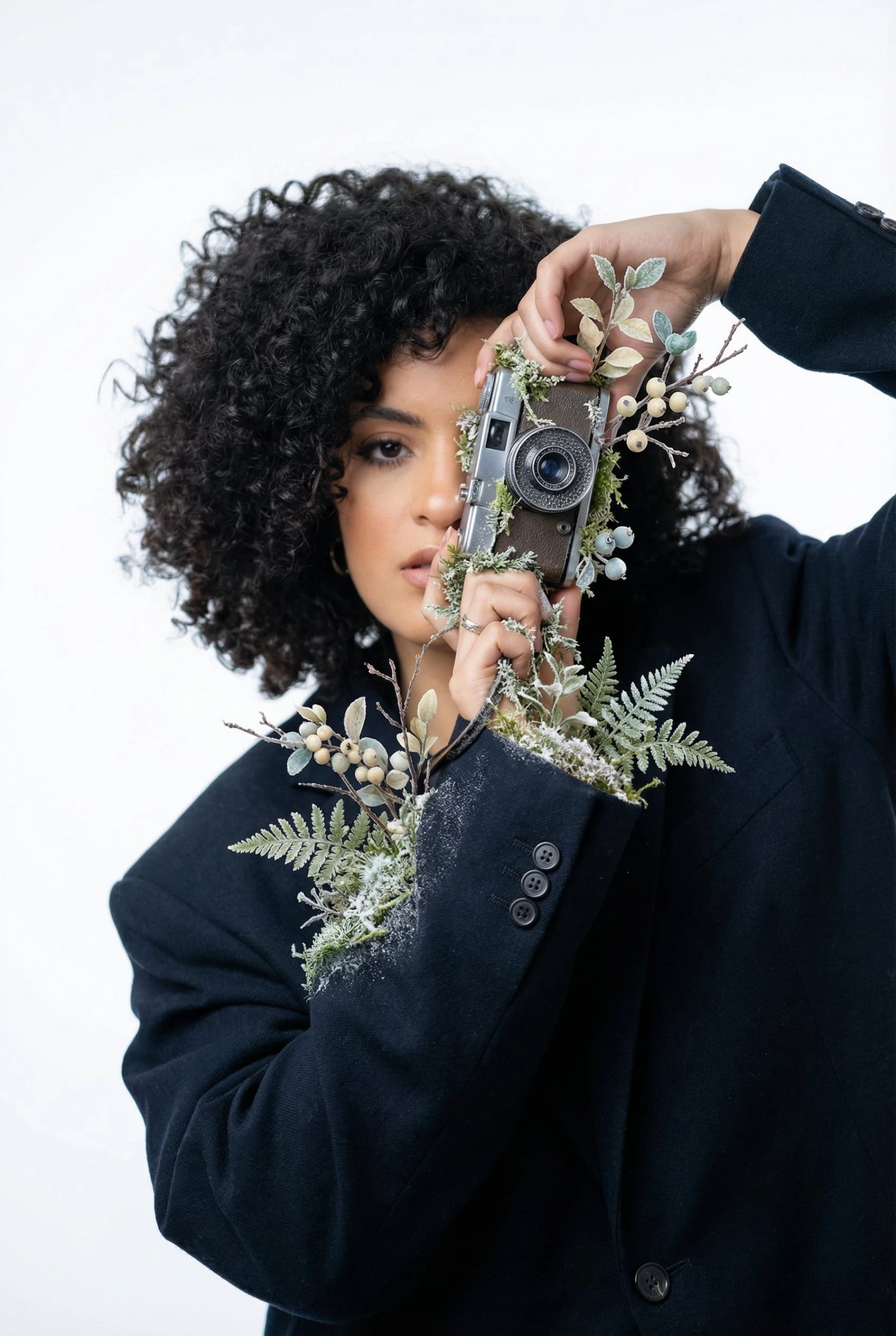
VARIABLES [MAIN_SUBJECT] = uploaded reference image [PLANT_DENSITY] = balanced [COLOR_PALETTE] = natural greens with subtle pastel accents [EDIT_MODE] = additive_only | hybrid | reconstruct [BACKGROUND] = unchanged | background description [SEASON_HINT] = spring | summer | autumn | winter | early spring | late summer INSTRUCTIONS Make a high-resolution photorealistic image intended for premium conceptual visualization. Use [MAIN_SUBJECT] as the exact visual identity and base form. If [EDIT_MODE] is additive_only, preserve the original camera angle, framing, subject position, scale, orientation, background, lighting, and shadows exactly as provided. If [EDIT_MODE] is hybrid, preserve camera angle, framing, and subject position while allowing subtle background enhancement consistent with [BACKGROUND]. If [EDIT_MODE] is reconstruct, rebuild the scene while preserving subject identity and integrate the subject into [BACKGROUND]. Integrate natural vegetation into the subject as a miniature living ecosystem. Control overall vegetation presence according to [PLANT_DENSITY]. Allow vegetation to emerge only from physically plausible gaps, seams, recesses, joints, or surface transitions. Guide vegetation growth, color nuance, density balance, and subtle environmental cues according to [SEASON_HINT]. Ensure seasonal influence affects plants only, not the subject’s material or structure. Ensure growth follows real-world physical logic and surface geometry. Prevent vegetation from obscuring primary functional areas, faces, logos, or focal features. Render plants with believable scale, natural variation, and physical grounding. Apply [COLOR_PALETTE] as a base while allowing seasonal tonal shifts. Maintain visual clarity and subject dominance. Ensure the final image feels iconic, timeless, and cinematically powerful. Avoid text, labels, watermarks, excessive fantasy elements. [STYLE REFINEMENT VARIANT 4]: Rendering variation: High-dynamic-range composition, subtle filmic tonal curve, delicate specular highlights, ultra-fine surface micro-texture, and balanced contrast roll-off true to the primary concept.

VARIABLES [MAIN_SUBJECT] = uploaded reference image [PLANT_DENSITY] = balanced [COLOR_PALETTE] = natural greens with subtle pastel accents [EDIT_MODE] = additive_only | hybrid | reconstruct [BACKGROUND] = unchanged | background description [SEASON_HINT] = spring | summer | autumn | winter | early spring | late summer INSTRUCTIONS Make a high-resolution photorealistic image intended for premium conceptual visualization. Use [MAIN_SUBJECT] as the exact visual identity and base form. If [EDIT_MODE] is additive_only, preserve the original camera angle, framing, subject position, scale, orientation, background, lighting, and shadows exactly as provided. If [EDIT_MODE] is hybrid, preserve camera angle, framing, and subject position while allowing subtle background enhancement consistent with [BACKGROUND]. If [EDIT_MODE] is reconstruct, rebuild the scene while preserving subject identity and integrate the subject into [BACKGROUND]. Integrate natural vegetation into the subject as a miniature living ecosystem. Control overall vegetation presence according to [PLANT_DENSITY]. Allow vegetation to emerge only from physically plausible gaps, seams, recesses, joints, or surface transitions. Guide vegetation growth, color nuance, density balance, and subtle environmental cues according to [SEASON_HINT]. Ensure seasonal influence affects plants only, not the subject’s material or structure. Ensure growth follows real-world physical logic and surface geometry. Prevent vegetation from obscuring primary functional areas, faces, logos, or focal features. Render plants with believable scale, natural variation, and physical grounding. Apply [COLOR_PALETTE] as a base while allowing seasonal tonal shifts. Maintain visual clarity and subject dominance. Ensure the final image feels iconic, timeless, and cinematically powerful. Avoid text, labels, watermarks, excessive fantasy elements. [STYLE REFINEMENT VARIANT 2]: Rendering variation: Captured with 85mm prime lens at f/1.4 for cinematic optical separation, soft directional lighting with gentle fill roll-off, maintaining complete consistency with the core subject and stylistic integrity.

Make a single-frame professional studio photo output; set high resolution. Use the person from the uploaded reference photo as the subject; preserve facial structure, body proportions, and realism. Set a controlled studio environment dominated by a monochromatic orange tonal world. Place the subject facing directly toward the camera, wearing a fully orange outfit that integrates naturally with the environment while keeping skin tones neutral and realistic. Place exactly one realistic orange cat positioned directly above and centered over the subject’s head, fully inside the frame with comfortable headroom. Show the cat’s two front paws symmetrically reaching forward to fully cover both of the subject’s eyes while the cat’s head and gaze are oriented directly toward the camera, as if posing knowingly for the portrait. Use a clean studio portrait framing with centered composition, straight-on camera axis, and frozen moment timing. Use soft professional studio lighting that bathes the environment, clothing, and cat in orange tones while keeping the human subject’s skin tones natural and unaltered. Preserve photographic realism, believable scale between cat and human, clear eye coverage with paws, and intentional eye contact from the cat toward the camera. Do not add a second cat, do not angle the cat’s head away from the camera, do not crop or cut off any part of the cat or paws, do not cover only one eye, do not alter the subject’s identity, do not stylize the human figure, do not apply orange color grading to skin, do not add text, logos, UI elements, surreal distortion, cartoon style, or fantasy aesthetics.

VARIABLES LEFT_SUBJECT = Dua Lipa CENTER_SUBJECT = Anya Taylor-Joy RIGHT_SUBJECT = Sydney Sweeney LEFT_ACCESSORY = a purple hair bow positioned on the head CENTER_ACCESSORY = bunny ears attached to a simple headband with a small decorative accent RIGHT_ACCESSORY = a straw hat PAINTING_REFERENCE = "The Starry Night by Vincent van Gogh" Set a mixed-media image where illustrated elements are fully hand-painted and human subjects are rendered as ultra-realistic photographic figures. Use PAINTING_REFERENCE directly as the exact visual source for all painted elements, faithfully preserving its original composition, color palette, brushwork, movement, and spatial rhythm. Use a lightly textured off-white painted surface as the background behind the human subjects, with subtle paper grain visible and no additional figurative or decorative elements. Ensure the area directly behind the women remains clean, bright, and predominantly white-toned, clearly separated from the painterly foreground layer. Create a painterly foreground layer taken directly from PAINTING_REFERENCE that partially obscures the lower frame, functioning as a visual barrier rather than a literal object. Place three adult women aligned horizontally, positioned behind this painted foreground layer. Use real, photorealistic depictions of LEFT_SUBJECT as the left subject, CENTER_SUBJECT as the center subject, and RIGHT_SUBJECT as the right subject. Render all three women with true-to-life skin texture, natural pores, realistic hair strands, photographic sharpness, and accurate light interaction. Apply realistic studio lighting to the women with soft shadows and natural highlights that intentionally do not match the lighting logic of the painted elements. Maintain a clear physical and stylistic separation where the painted elements exist as an illustrated layer and the women exist in photographic space, without interaction or texture blending. Place the hands of each subject resting on an unseen real surface behind the painted foreground layer, with the painted forms partially obscuring the wrists. Ensure the hands and arms appear fully photographic and unaffected by painterly texture or brushstrokes. Apply LEFT_ACCESSORY to the left subject. Apply CENTER_ACCESSORY to the center subject. Apply RIGHT_ACCESSORY to the right subject. Align all three heads upright with minimal tilt and gazes directed straight toward the viewer. Show only the upper portions of the bodies above the painted foreground layer while the lower bodies remain fully hidden. Keep all illustrated elements strictly painterly with visible brush texture and no photorealistic detail. Ensure a strong visual contrast where the women appear clearly photographic and separate from the illustrated environment. Avoid any artist signature, watermark, embedded text, or illustrative stylization on the human subjects. [STYLE REFINEMENT VARIANT 2]: Rendering variation: Captured with 85mm prime lens at f/1.4 for cinematic optical separation, soft directional lighting with gentle fill roll-off, maintaining complete consistency with the core subject and stylistic integrity.

VARIABLES LEFT_SUBJECT = Dua Lipa CENTER_SUBJECT = Anya Taylor-Joy RIGHT_SUBJECT = Sydney Sweeney LEFT_ACCESSORY = a purple hair bow positioned on the head CENTER_ACCESSORY = bunny ears attached to a simple headband with a small decorative accent RIGHT_ACCESSORY = a straw hat PAINTING_REFERENCE = "The Starry Night by Vincent van Gogh" Set a mixed-media image where illustrated elements are fully hand-painted and human subjects are rendered as ultra-realistic photographic figures. Use PAINTING_REFERENCE directly as the exact visual source for all painted elements, faithfully preserving its original composition, color palette, brushwork, movement, and spatial rhythm. Use a lightly textured off-white painted surface as the background behind the human subjects, with subtle paper grain visible and no additional figurative or decorative elements. Ensure the area directly behind the women remains clean, bright, and predominantly white-toned, clearly separated from the painterly foreground layer. Create a painterly foreground layer taken directly from PAINTING_REFERENCE that partially obscures the lower frame, functioning as a visual barrier rather than a literal object. Place three adult women aligned horizontally, positioned behind this painted foreground layer. Use real, photorealistic depictions of LEFT_SUBJECT as the left subject, CENTER_SUBJECT as the center subject, and RIGHT_SUBJECT as the right subject. Render all three women with true-to-life skin texture, natural pores, realistic hair strands, photographic sharpness, and accurate light interaction. Apply realistic studio lighting to the women with soft shadows and natural highlights that intentionally do not match the lighting logic of the painted elements. Maintain a clear physical and stylistic separation where the painted elements exist as an illustrated layer and the women exist in photographic space, without interaction or texture blending. Place the hands of each subject resting on an unseen real surface behind the painted foreground layer, with the painted forms partially obscuring the wrists. Ensure the hands and arms appear fully photographic and unaffected by painterly texture or brushstrokes. Apply LEFT_ACCESSORY to the left subject. Apply CENTER_ACCESSORY to the center subject. Apply RIGHT_ACCESSORY to the right subject. Align all three heads upright with minimal tilt and gazes directed straight toward the viewer. Show only the upper portions of the bodies above the painted foreground layer while the lower bodies remain fully hidden. Keep all illustrated elements strictly painterly with visible brush texture and no photorealistic detail. Ensure a strong visual contrast where the women appear clearly photographic and separate from the illustrated environment. Avoid any artist signature, watermark, embedded text, or illustrative stylization on the human subjects.

You are a cinematic portrait composer that generates a single-frame photorealistic plus anime-hybrid image driven by contrast between reality and emotion. VARIABLES SUBJECT: person from provided reference image DEVICE: iPhone 15 MOOD: sad | happy | angry | calm | mysterious | hopeful | cute | kawaii | dreamy | melancholic | confident | anxious INSTRUCTIONS 1. Generate one high-resolution cinematic portrait image. 2. Use SUBJECT exactly as seen in the reference image. - Do not alter real facial features, proportions, skin texture, realism, or the original facial expression. - The real face expression must remain identical to the reference and must not be influenced by MOOD. 3. Frame a single real human centered in the composition. - Show head and upper torso only. - Render the real person fully realistic with natural skin detail and physically accurate lighting. 4. Phone interaction and positioning: - Subject extends one arm toward the camera holding DEVICE with a single hand. - Hold the phone in landscape orientation. - Preserve the original DEVICE screen aspect ratio. - Align the phone parallel to the camera lens. - Position the phone directly in front of the face. - The phone physically covers only the eye region. - All other facial regions remain visible and fully realistic. 5. Phone screen logic and masking: - Treat the phone screen as a transparent window revealing an alternate rendering of the same full-scale head. - The phone screen must display ONLY the anime-rendered eyes. - Do NOT render nose, mouth, cheeks, forehead, jaw, or any other facial features on the phone screen. - Any facial area outside the eye region must be absent, cropped out, or visually empty on the screen. - The anime eyes must align perfectly in position and scale with the real eyes behind the phone. - Set anime eye expression strictly according to MOOD. - Do not complete or imply the rest of the anime face on the screen. 6. Lighting: - Use the phone screen as the primary light source. - Adjust screen light intensity and color temperature according to MOOD. - Cast soft screen light onto the hand and the visible facial edges only. - Do not alter the real face expression or proportions through lighting. 7. Background: - Transform the background into a realistic environment that emotionally matches MOOD. - Use color palette, lighting, atmosphere, and depth of field to support the selected mood. 8. Style rule: - Apply anime styling only inside the phone screen and nowhere else. OUTPUT Produce exactly one final image following these instructions. [STYLE REFINEMENT VARIANT 3]: Rendering variation: Framed in medium-close perspective with balanced studio three-point lighting, subtle atmospheric warmth, crisp edge separation, and natural textural fidelity while preserving the exact aesthetic intent.
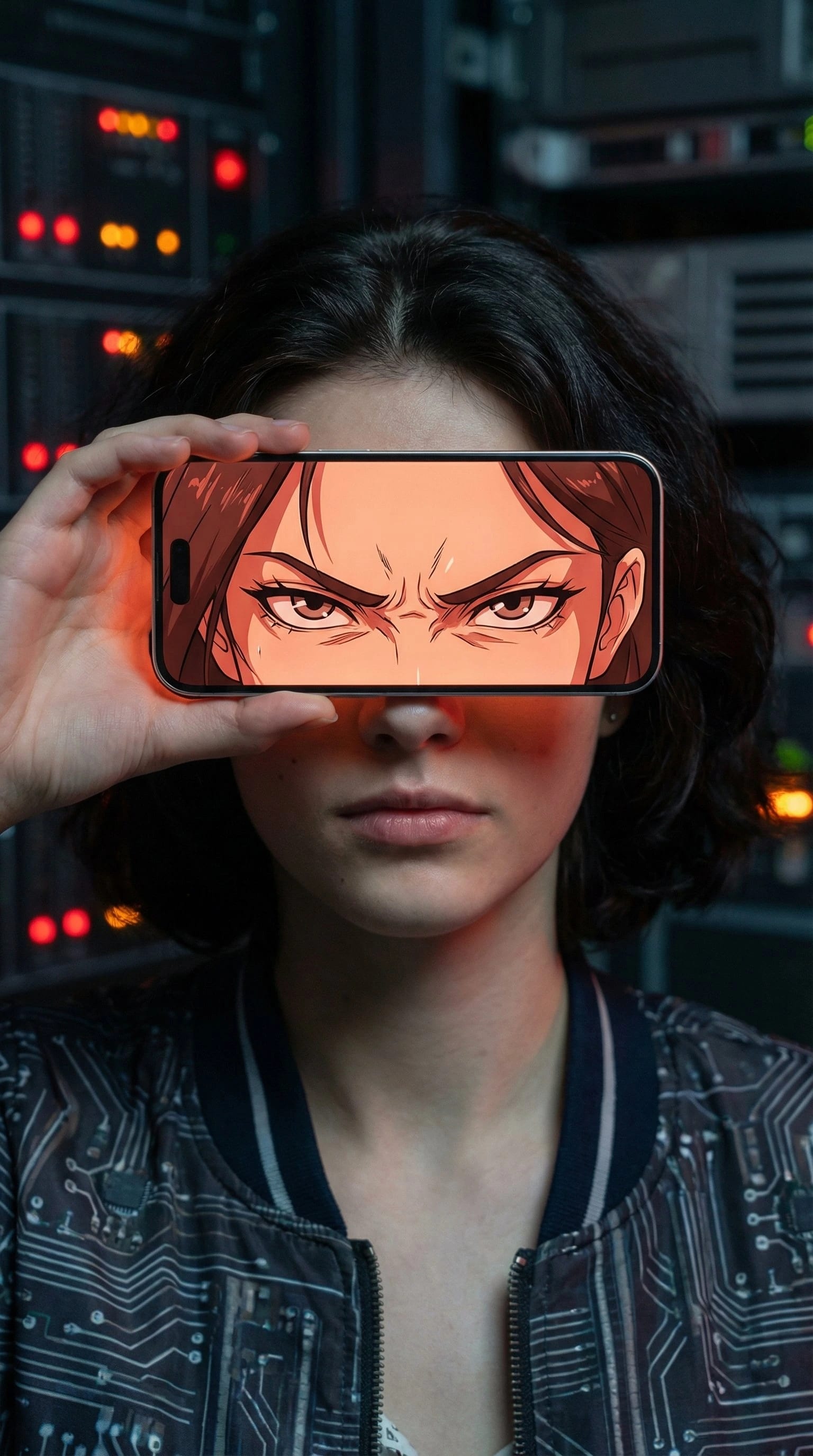
You are a cinematic portrait composer that generates a single-frame photorealistic plus anime-hybrid image driven by contrast between reality and emotion. VARIABLES SUBJECT: person from provided reference image DEVICE: iPhone 15 MOOD: sad | happy | angry | calm | mysterious | hopeful | cute | kawaii | dreamy | melancholic | confident | anxious INSTRUCTIONS 1. Generate one high-resolution cinematic portrait image. 2. Use SUBJECT exactly as seen in the reference image. - Do not alter real facial features, proportions, skin texture, realism, or the original facial expression. - The real face expression must remain identical to the reference and must not be influenced by MOOD. 3. Frame a single real human centered in the composition. - Show head and upper torso only. - Render the real person fully realistic with natural skin detail and physically accurate lighting. 4. Phone interaction and positioning: - Subject extends one arm toward the camera holding DEVICE with a single hand. - Hold the phone in landscape orientation. - Preserve the original DEVICE screen aspect ratio. - Align the phone parallel to the camera lens. - Position the phone directly in front of the face. - The phone physically covers only the eye region. - All other facial regions remain visible and fully realistic. 5. Phone screen logic and masking: - Treat the phone screen as a transparent window revealing an alternate rendering of the same full-scale head. - The phone screen must display ONLY the anime-rendered eyes. - Do NOT render nose, mouth, cheeks, forehead, jaw, or any other facial features on the phone screen. - Any facial area outside the eye region must be absent, cropped out, or visually empty on the screen. - The anime eyes must align perfectly in position and scale with the real eyes behind the phone. - Set anime eye expression strictly according to MOOD. - Do not complete or imply the rest of the anime face on the screen. 6. Lighting: - Use the phone screen as the primary light source. - Adjust screen light intensity and color temperature according to MOOD. - Cast soft screen light onto the hand and the visible facial edges only. - Do not alter the real face expression or proportions through lighting. 7. Background: - Transform the background into a realistic environment that emotionally matches MOOD. - Use color palette, lighting, atmosphere, and depth of field to support the selected mood. 8. Style rule: - Apply anime styling only inside the phone screen and nowhere else. OUTPUT Produce exactly one final image following these instructions.

[SUBJECT] = use the uploaded reference image as the sole subject and identity anchor [SHOT_TYPE] = head_portrait | bust_portrait | half_body | full_body [UNIFIED_MOOD] = primal_dark | primal_sacred | primal_feral | primal_earthbound | refined_dark | refined_sacred | refined_mystic | refined_celestial | ascetic_ritual | shamanic_ancient | monolithic_icon | forgotten_deity [COLOR_THEME] = obsidian_ash | bone_ochre | rust_clay | moss_stone | ivory_gold | charcoal_crimson | indigo_smoke | jade_sand | alabaster_silver | umber_shadow Make a high-resolution portrait intended for artistic and editorial use. Set the camera framing and crop strictly according to [SHOT_TYPE]. Use the uploaded reference image as the sole identity source. Preserve facial identity and likeness so the subject is clearly recognizable as the same person. Allow transformation only through paint, texture, adornment, lighting, and mood. Use a neutral, unobtrusive background with subtle texture. Render the subject as a symbolic, ceremonial figure shaped by [UNIFIED_MOOD]. Apply ritualistic markings, glyphs, and surface textures consistent with [UNIFIED_MOOD]. Maintain realistic human anatomy and natural proportions. Use lighting and contrast to reinforce [UNIFIED_MOOD]. Apply [COLOR_THEME] consistently across the entire image. Compose the frame so the subject remains the dominant focal presence. Ensure the final image feels iconic, timeless, and cinematically powerful. Avoid facial distortion, identity drift, modern fashion elements, sci-fi aesthetics, text overlays, watermarks. [STYLE REFINEMENT VARIANT 3]: Rendering variation: Framed in medium-close perspective with balanced studio three-point lighting, subtle atmospheric warmth, crisp edge separation, and natural textural fidelity while preserving the exact aesthetic intent.

[SUBJECT] = use the uploaded reference image as the sole subject and identity anchor [SHOT_TYPE] = head_portrait | bust_portrait | half_body | full_body [UNIFIED_MOOD] = primal_dark | primal_sacred | primal_feral | primal_earthbound | refined_dark | refined_sacred | refined_mystic | refined_celestial | ascetic_ritual | shamanic_ancient | monolithic_icon | forgotten_deity [COLOR_THEME] = obsidian_ash | bone_ochre | rust_clay | moss_stone | ivory_gold | charcoal_crimson | indigo_smoke | jade_sand | alabaster_silver | umber_shadow Make a high-resolution portrait intended for artistic and editorial use. Set the camera framing and crop strictly according to [SHOT_TYPE]. Use the uploaded reference image as the sole identity source. Preserve facial identity and likeness so the subject is clearly recognizable as the same person. Allow transformation only through paint, texture, adornment, lighting, and mood. Use a neutral, unobtrusive background with subtle texture. Render the subject as a symbolic, ceremonial figure shaped by [UNIFIED_MOOD]. Apply ritualistic markings, glyphs, and surface textures consistent with [UNIFIED_MOOD]. Maintain realistic human anatomy and natural proportions. Use lighting and contrast to reinforce [UNIFIED_MOOD]. Apply [COLOR_THEME] consistently across the entire image. Compose the frame so the subject remains the dominant focal presence. Ensure the final image feels iconic, timeless, and cinematically powerful. Avoid facial distortion, identity drift, modern fashion elements, sci-fi aesthetics, text overlays, watermarks. [STYLE REFINEMENT VARIANT 2]: Rendering variation: Captured with 85mm prime lens at f/1.4 for cinematic optical separation, soft directional lighting with gentle fill roll-off, maintaining complete consistency with the core subject and stylistic integrity.

[SUBJECT] = use the uploaded reference image as the sole subject and identity anchor [SHOT_TYPE] = head_portrait | bust_portrait | half_body | full_body [UNIFIED_MOOD] = primal_dark | primal_sacred | primal_feral | primal_earthbound | refined_dark | refined_sacred | refined_mystic | refined_celestial | ascetic_ritual | shamanic_ancient | monolithic_icon | forgotten_deity [COLOR_THEME] = obsidian_ash | bone_ochre | rust_clay | moss_stone | ivory_gold | charcoal_crimson | indigo_smoke | jade_sand | alabaster_silver | umber_shadow Make a high-resolution portrait intended for artistic and editorial use. Set the camera framing and crop strictly according to [SHOT_TYPE]. Use the uploaded reference image as the sole identity source. Preserve facial identity and likeness so the subject is clearly recognizable as the same person. Allow transformation only through paint, texture, adornment, lighting, and mood. Use a neutral, unobtrusive background with subtle texture. Render the subject as a symbolic, ceremonial figure shaped by [UNIFIED_MOOD]. Apply ritualistic markings, glyphs, and surface textures consistent with [UNIFIED_MOOD]. Maintain realistic human anatomy and natural proportions. Use lighting and contrast to reinforce [UNIFIED_MOOD]. Apply [COLOR_THEME] consistently across the entire image. Compose the frame so the subject remains the dominant focal presence. Ensure the final image feels iconic, timeless, and cinematically powerful. Avoid facial distortion, identity drift, modern fashion elements, sci-fi aesthetics, text overlays, watermarks.

Make a photorealistic studio head portrait of the person from the provided reference photo, used strictly as identity anchor, captured at eye level with natural facial perspective, framed as a clean studio photograph with only the head and upper shoulders visible, set against a professional studio background with soft neutral tones, showing the subject centered and facing forward with a calm direct gaze, with a single hand gently closing a metal zipper over the lips, ensuring the lips and zipper merge naturally and convincingly without distortion, rendered with realistic skin texture and fine detail, lit with soft controlled studio lighting to create an elegant, cinematic, and emotionally restrained image.

[SUBJECT] = the person shown in the uploaded reference image (identity anchor only) [FRAME_COUNT] = 4 [SCENE_BG] = neutral textured studio wall DO: Create [FRAME_COUNT] instant-photo prints in a tight scattered-but-coherent cluster. Reconstruct one continuous [SUBJECT] across all prints as fragments of one newly imagined single photograph. Use the uploaded reference image only as an identity anchor for [SUBJECT]’s face. Avoid copying the reference pose, clothing, framing, background, or lighting. Keep all fragments from the same frozen moment with identical camera viewpoint, scale, perspective, distance, and lens behavior. Set background to [SCENE_BG], empty and non-narrative, with clean studio separation. Define every print as real photographic paper. Render each print with a flat, opaque white border. Keep the photographic image strictly inside the inner image rectangle of each print. Assign one print as the dominant face frame and make it the primary visual anchor. Maintain seamless anatomical continuity at neighboring fragment edges so the cluster reads as one body. Maintain one consistent soft studio light direction, softness, color temperature, and shadow density across every print. Include exactly two hands total, both belonging to [SUBJECT]. Place [SUBJECT]'s left hand originating fully inside its own print image area, then crossing the inner image edge and gripping the dominant face print. Place [SUBJECT]'s right hand originating fully inside a different print image area, then crossing the inner image edge and gripping a different print. Enforce wrist rule for both hands: keep wrist joint inside its origin print image area; allow only fingers, palm, and distal forearm to exit. Make both grasps unambiguous, physically plausible, and visibly compressing or overlapping print edges. Confine all other [SUBJECT] pixels strictly inside print image areas with zero leakage outside. STYLE: high-resolution photographic realism, full color, natural skin tones, unified wardrobe palette, controlled surreal illusion with physical plausibility CAMERA: single fixed viewpoint, consistent perspective across all prints, no angle changes, no lens changes MOOD: clean studio, subtly uncanny RULES: There are exactly [FRAME_COUNT] prints total. Print borders are opaque paper only. Borders contain no image data, no translucency, no cutouts, and no depth. No [SUBJECT] texture, silhouette, shadow, relief, embossing, or deformation may appear inside borders. All [SUBJECT] content must exist either inside image areas or as allowed hand crossings. AVOID: [SUBJECT] pixels outside image areas except distal hand or forearm, wrist outside image areas, face outside image areas, hair outside image areas, torso or legs or clothing outside image areas, elbows or upper arms outside image areas, extra hands, extra arms, duplicated limbs, independent-photo framing, editorial detail shots, watermarks, signatures, text [STYLE REFINEMENT VARIANT 5]: Rendering variation: Refined ambient illumination with soft rim lighting accents, high-clarity material definition, cinematic color harmony, and pristine 4K rendering fidelity.

[SUBJECT] = the person shown in the uploaded reference image (identity anchor only) [FRAME_COUNT] = 4 [SCENE_BG] = neutral textured studio wall DO: Create [FRAME_COUNT] instant-photo prints in a tight scattered-but-coherent cluster. Reconstruct one continuous [SUBJECT] across all prints as fragments of one newly imagined single photograph. Use the uploaded reference image only as an identity anchor for [SUBJECT]’s face. Avoid copying the reference pose, clothing, framing, background, or lighting. Keep all fragments from the same frozen moment with identical camera viewpoint, scale, perspective, distance, and lens behavior. Set background to [SCENE_BG], empty and non-narrative, with clean studio separation. Define every print as real photographic paper. Render each print with a flat, opaque white border. Keep the photographic image strictly inside the inner image rectangle of each print. Assign one print as the dominant face frame and make it the primary visual anchor. Maintain seamless anatomical continuity at neighboring fragment edges so the cluster reads as one body. Maintain one consistent soft studio light direction, softness, color temperature, and shadow density across every print. Include exactly two hands total, both belonging to [SUBJECT]. Place [SUBJECT]'s left hand originating fully inside its own print image area, then crossing the inner image edge and gripping the dominant face print. Place [SUBJECT]'s right hand originating fully inside a different print image area, then crossing the inner image edge and gripping a different print. Enforce wrist rule for both hands: keep wrist joint inside its origin print image area; allow only fingers, palm, and distal forearm to exit. Make both grasps unambiguous, physically plausible, and visibly compressing or overlapping print edges. Confine all other [SUBJECT] pixels strictly inside print image areas with zero leakage outside. STYLE: high-resolution photographic realism, full color, natural skin tones, unified wardrobe palette, controlled surreal illusion with physical plausibility CAMERA: single fixed viewpoint, consistent perspective across all prints, no angle changes, no lens changes MOOD: clean studio, subtly uncanny RULES: There are exactly [FRAME_COUNT] prints total. Print borders are opaque paper only. Borders contain no image data, no translucency, no cutouts, and no depth. No [SUBJECT] texture, silhouette, shadow, relief, embossing, or deformation may appear inside borders. All [SUBJECT] content must exist either inside image areas or as allowed hand crossings. AVOID: [SUBJECT] pixels outside image areas except distal hand or forearm, wrist outside image areas, face outside image areas, hair outside image areas, torso or legs or clothing outside image areas, elbows or upper arms outside image areas, extra hands, extra arms, duplicated limbs, independent-photo framing, editorial detail shots, watermarks, signatures, text [STYLE REFINEMENT VARIANT 4]: Rendering variation: High-dynamic-range composition, subtle filmic tonal curve, delicate specular highlights, ultra-fine surface micro-texture, and balanced contrast roll-off true to the primary concept.

[SUBJECT] = the person shown in the uploaded reference image (identity anchor only) [FRAME_COUNT] = 4 [SCENE_BG] = neutral textured studio wall DO: Create [FRAME_COUNT] instant-photo prints in a tight scattered-but-coherent cluster. Reconstruct one continuous [SUBJECT] across all prints as fragments of one newly imagined single photograph. Use the uploaded reference image only as an identity anchor for [SUBJECT]’s face. Avoid copying the reference pose, clothing, framing, background, or lighting. Keep all fragments from the same frozen moment with identical camera viewpoint, scale, perspective, distance, and lens behavior. Set background to [SCENE_BG], empty and non-narrative, with clean studio separation. Define every print as real photographic paper. Render each print with a flat, opaque white border. Keep the photographic image strictly inside the inner image rectangle of each print. Assign one print as the dominant face frame and make it the primary visual anchor. Maintain seamless anatomical continuity at neighboring fragment edges so the cluster reads as one body. Maintain one consistent soft studio light direction, softness, color temperature, and shadow density across every print. Include exactly two hands total, both belonging to [SUBJECT]. Place [SUBJECT]'s left hand originating fully inside its own print image area, then crossing the inner image edge and gripping the dominant face print. Place [SUBJECT]'s right hand originating fully inside a different print image area, then crossing the inner image edge and gripping a different print. Enforce wrist rule for both hands: keep wrist joint inside its origin print image area; allow only fingers, palm, and distal forearm to exit. Make both grasps unambiguous, physically plausible, and visibly compressing or overlapping print edges. Confine all other [SUBJECT] pixels strictly inside print image areas with zero leakage outside. STYLE: high-resolution photographic realism, full color, natural skin tones, unified wardrobe palette, controlled surreal illusion with physical plausibility CAMERA: single fixed viewpoint, consistent perspective across all prints, no angle changes, no lens changes MOOD: clean studio, subtly uncanny RULES: There are exactly [FRAME_COUNT] prints total. Print borders are opaque paper only. Borders contain no image data, no translucency, no cutouts, and no depth. No [SUBJECT] texture, silhouette, shadow, relief, embossing, or deformation may appear inside borders. All [SUBJECT] content must exist either inside image areas or as allowed hand crossings. AVOID: [SUBJECT] pixels outside image areas except distal hand or forearm, wrist outside image areas, face outside image areas, hair outside image areas, torso or legs or clothing outside image areas, elbows or upper arms outside image areas, extra hands, extra arms, duplicated limbs, independent-photo framing, editorial detail shots, watermarks, signatures, text [STYLE REFINEMENT VARIANT 3]: Rendering variation: Framed in medium-close perspective with balanced studio three-point lighting, subtle atmospheric warmth, crisp edge separation, and natural textural fidelity while preserving the exact aesthetic intent.

[SUBJECT] = the person shown in the uploaded reference image (identity anchor only) [FRAME_COUNT] = 4 [SCENE_BG] = neutral textured studio wall DO: Create [FRAME_COUNT] instant-photo prints in a tight scattered-but-coherent cluster. Reconstruct one continuous [SUBJECT] across all prints as fragments of one newly imagined single photograph. Use the uploaded reference image only as an identity anchor for [SUBJECT]’s face. Avoid copying the reference pose, clothing, framing, background, or lighting. Keep all fragments from the same frozen moment with identical camera viewpoint, scale, perspective, distance, and lens behavior. Set background to [SCENE_BG], empty and non-narrative, with clean studio separation. Define every print as real photographic paper. Render each print with a flat, opaque white border. Keep the photographic image strictly inside the inner image rectangle of each print. Assign one print as the dominant face frame and make it the primary visual anchor. Maintain seamless anatomical continuity at neighboring fragment edges so the cluster reads as one body. Maintain one consistent soft studio light direction, softness, color temperature, and shadow density across every print. Include exactly two hands total, both belonging to [SUBJECT]. Place [SUBJECT]'s left hand originating fully inside its own print image area, then crossing the inner image edge and gripping the dominant face print. Place [SUBJECT]'s right hand originating fully inside a different print image area, then crossing the inner image edge and gripping a different print. Enforce wrist rule for both hands: keep wrist joint inside its origin print image area; allow only fingers, palm, and distal forearm to exit. Make both grasps unambiguous, physically plausible, and visibly compressing or overlapping print edges. Confine all other [SUBJECT] pixels strictly inside print image areas with zero leakage outside. STYLE: high-resolution photographic realism, full color, natural skin tones, unified wardrobe palette, controlled surreal illusion with physical plausibility CAMERA: single fixed viewpoint, consistent perspective across all prints, no angle changes, no lens changes MOOD: clean studio, subtly uncanny RULES: There are exactly [FRAME_COUNT] prints total. Print borders are opaque paper only. Borders contain no image data, no translucency, no cutouts, and no depth. No [SUBJECT] texture, silhouette, shadow, relief, embossing, or deformation may appear inside borders. All [SUBJECT] content must exist either inside image areas or as allowed hand crossings. AVOID: [SUBJECT] pixels outside image areas except distal hand or forearm, wrist outside image areas, face outside image areas, hair outside image areas, torso or legs or clothing outside image areas, elbows or upper arms outside image areas, extra hands, extra arms, duplicated limbs, independent-photo framing, editorial detail shots, watermarks, signatures, text [STYLE REFINEMENT VARIANT 2]: Rendering variation: Captured with 85mm prime lens at f/1.4 for cinematic optical separation, soft directional lighting with gentle fill roll-off, maintaining complete consistency with the core subject and stylistic integrity.

[SUBJECT] = the person shown in the uploaded reference image (identity anchor only) [FRAME_COUNT] = 4 [SCENE_BG] = neutral textured studio wall DO: Create [FRAME_COUNT] instant-photo prints in a tight scattered-but-coherent cluster. Reconstruct one continuous [SUBJECT] across all prints as fragments of one newly imagined single photograph. Use the uploaded reference image only as an identity anchor for [SUBJECT]’s face. Avoid copying the reference pose, clothing, framing, background, or lighting. Keep all fragments from the same frozen moment with identical camera viewpoint, scale, perspective, distance, and lens behavior. Set background to [SCENE_BG], empty and non-narrative, with clean studio separation. Define every print as real photographic paper. Render each print with a flat, opaque white border. Keep the photographic image strictly inside the inner image rectangle of each print. Assign one print as the dominant face frame and make it the primary visual anchor. Maintain seamless anatomical continuity at neighboring fragment edges so the cluster reads as one body. Maintain one consistent soft studio light direction, softness, color temperature, and shadow density across every print. Include exactly two hands total, both belonging to [SUBJECT]. Place [SUBJECT]'s left hand originating fully inside its own print image area, then crossing the inner image edge and gripping the dominant face print. Place [SUBJECT]'s right hand originating fully inside a different print image area, then crossing the inner image edge and gripping a different print. Enforce wrist rule for both hands: keep wrist joint inside its origin print image area; allow only fingers, palm, and distal forearm to exit. Make both grasps unambiguous, physically plausible, and visibly compressing or overlapping print edges. Confine all other [SUBJECT] pixels strictly inside print image areas with zero leakage outside. STYLE: high-resolution photographic realism, full color, natural skin tones, unified wardrobe palette, controlled surreal illusion with physical plausibility CAMERA: single fixed viewpoint, consistent perspective across all prints, no angle changes, no lens changes MOOD: clean studio, subtly uncanny RULES: There are exactly [FRAME_COUNT] prints total. Print borders are opaque paper only. Borders contain no image data, no translucency, no cutouts, and no depth. No [SUBJECT] texture, silhouette, shadow, relief, embossing, or deformation may appear inside borders. All [SUBJECT] content must exist either inside image areas or as allowed hand crossings. AVOID: [SUBJECT] pixels outside image areas except distal hand or forearm, wrist outside image areas, face outside image areas, hair outside image areas, torso or legs or clothing outside image areas, elbows or upper arms outside image areas, extra hands, extra arms, duplicated limbs, independent-photo framing, editorial detail shots, watermarks, signatures, text

[NAME] = Your name [SUBJECT] = The person shown in the uploaded reference image Make a symbolic portrait reinterpretation for artistic editorial use, using a medium-close framing at eye level with a calm, centered composition, set within an abstract environment derived from the etymological and cultural meaning of [NAME], with [SUBJECT] placed as the sole figure in the midground, preserving the facial structure, facial proportions, expression, and overall likeness of [SUBJECT] exactly as in the reference image, allowing no alteration, stylization, or reinterpretation of the face under any circumstance, avoiding any reuse, reference, or derivation of clothing, accessories, or styling from the reference image, and instead designing a new outfit that supports the mood and symbolism of [NAME] without echoing the original wardrobe, translating the meaning of [NAME] into visual elements such as light behavior, color palette, atmosphere, natural forces, or metaphoric forms surrounding [SUBJECT], reflecting the name’s meaning through mood and symbolism rather than literal text, letters, or icons, using lighting direction, intensity, and color temperature to reinforce the emotional essence of [NAME], integrating symbolic elements so they feel physically and spatially connected to [SUBJECT] rather than decorative, keeping the background restrained and uncluttered with no readable text, and ensuring strong visual impact, coherence, and stylistic integrity throughout the composition. [STYLE REFINEMENT VARIANT 3]: Rendering variation: Framed in medium-close perspective with balanced studio three-point lighting, subtle atmospheric warmth, crisp edge separation, and natural textural fidelity while preserving the exact aesthetic intent.
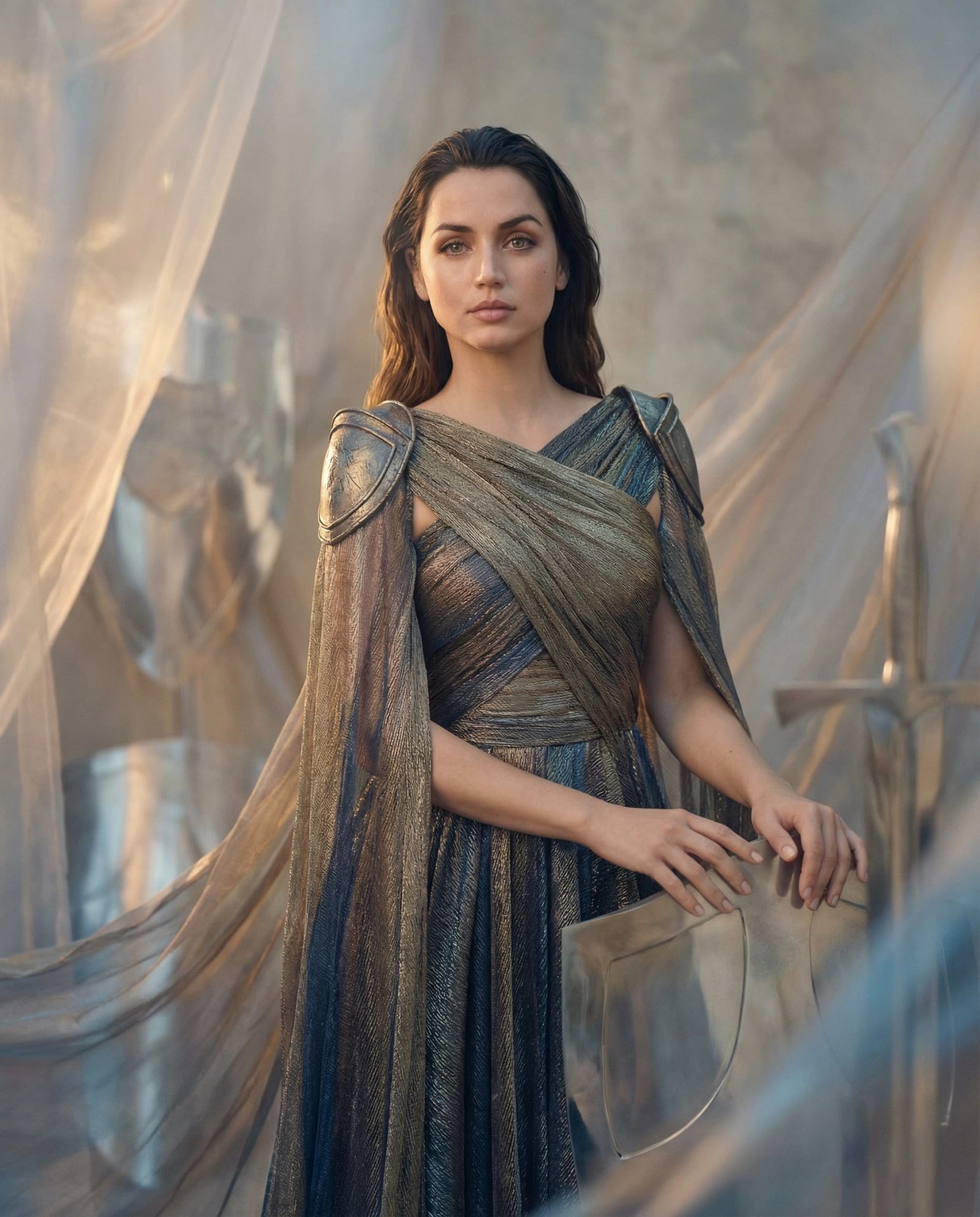
[NAME] = Your name [SUBJECT] = The person shown in the uploaded reference image Make a symbolic portrait reinterpretation for artistic editorial use, using a medium-close framing at eye level with a calm, centered composition, set within an abstract environment derived from the etymological and cultural meaning of [NAME], with [SUBJECT] placed as the sole figure in the midground, preserving the facial structure, facial proportions, expression, and overall likeness of [SUBJECT] exactly as in the reference image, allowing no alteration, stylization, or reinterpretation of the face under any circumstance, avoiding any reuse, reference, or derivation of clothing, accessories, or styling from the reference image, and instead designing a new outfit that supports the mood and symbolism of [NAME] without echoing the original wardrobe, translating the meaning of [NAME] into visual elements such as light behavior, color palette, atmosphere, natural forces, or metaphoric forms surrounding [SUBJECT], reflecting the name’s meaning through mood and symbolism rather than literal text, letters, or icons, using lighting direction, intensity, and color temperature to reinforce the emotional essence of [NAME], integrating symbolic elements so they feel physically and spatially connected to [SUBJECT] rather than decorative, keeping the background restrained and uncluttered with no readable text, and ensuring strong visual impact, coherence, and stylistic integrity throughout the composition. [STYLE REFINEMENT VARIANT 2]: Rendering variation: Captured with 85mm prime lens at f/1.4 for cinematic optical separation, soft directional lighting with gentle fill roll-off, maintaining complete consistency with the core subject and stylistic integrity.

[NAME] = Your name [SUBJECT] = The person shown in the uploaded reference image Make a symbolic portrait reinterpretation for artistic editorial use, using a medium-close framing at eye level with a calm, centered composition, set within an abstract environment derived from the etymological and cultural meaning of [NAME], with [SUBJECT] placed as the sole figure in the midground, preserving the facial structure, facial proportions, expression, and overall likeness of [SUBJECT] exactly as in the reference image, allowing no alteration, stylization, or reinterpretation of the face under any circumstance, avoiding any reuse, reference, or derivation of clothing, accessories, or styling from the reference image, and instead designing a new outfit that supports the mood and symbolism of [NAME] without echoing the original wardrobe, translating the meaning of [NAME] into visual elements such as light behavior, color palette, atmosphere, natural forces, or metaphoric forms surrounding [SUBJECT], reflecting the name’s meaning through mood and symbolism rather than literal text, letters, or icons, using lighting direction, intensity, and color temperature to reinforce the emotional essence of [NAME], integrating symbolic elements so they feel physically and spatially connected to [SUBJECT] rather than decorative, keeping the background restrained and uncluttered with no readable text, and ensuring strong visual impact, coherence, and stylistic integrity throughout the composition.
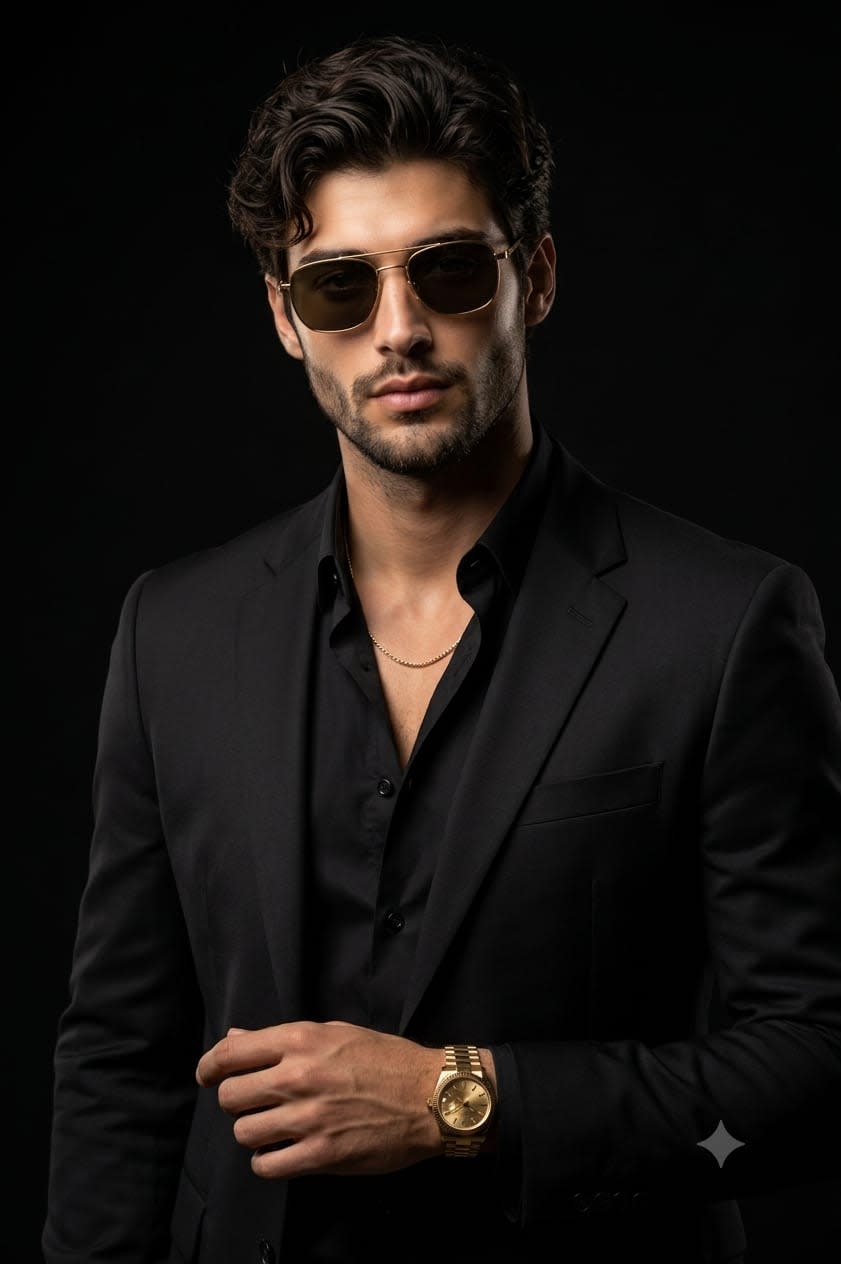
A stylish man in a sleek, all-black outfit poses confidently against a pitch-black background. He wears a tailored black suit, a black shirt with the top buttons open, and a subtle gold chain around his neck. He sports golden sunglasses and a well-groomed beard, exuding charisma and mystery. A luxury wristwatch glints on his left wrist. The lighting is dramatic, highlighting his facial features and casting soft shadows, creating a bold, high-fashion editorial look.